About Knock
What Knock Is
Knock is where Hosts open their doors and Neighbours gather around their table.
Someone shares something she loves — sourdough, sign making, embroidery, tea biscuits — and opens her home to a small group of neighbours. Six people. Maybe eight. Small enough that everyone’s name is remembered.
You do not need to be skilled. You do not need to know anyone. You just need to knock.
Why Homes
A community centre is neutral. A studio is professional. Someone’s home is an act of trust. It says: I am willing to let you in. I am willing to be known.
That vulnerability — on both sides — is what the science calls the precondition for closeness. You cannot manufacture it in a rented space.
The home is not incidental to what Knock is. The home is the whole point.
Who Built This
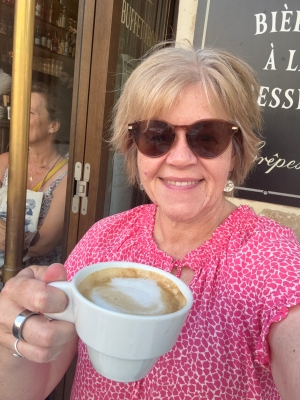
My name is Kim Desveaux. I have a BBA, an MBA, and a Full Stack Developer certificate from the University of Toronto that I earned in my 50s because I could not find anyone else to build this the way I knew it needed to be built.
I am not a tech founder who noticed a market opportunity. I am someone who looked around at the people I love — brilliant, warm, accomplished, lonely — and could not find a single platform designed to actually help them.
So I read everything. Thirteen peer-reviewed studies on loneliness, friendship formation, and community building. The Surgeon General’s advisory. The WHO resolution. Jeffrey Hall’s research on how many hours it takes to make a friend — 40 to 60, if you were wondering.
And then I built Knock.
The Problem
In 2023, the U.S. Surgeon General declared loneliness a public health epidemic — the same mortality risk as smoking fifteen cigarettes a day. In 2025, the WHO passed its first global resolution on social connection.
We have more ways to connect than any generation before us. We are lonelier than any generation before us.
There was a time when neighbourhoods were alive. When Sally three doors down taught you to knit. When Jane’s kitchen smelled like bread on Saturday morning and you were welcome to walk in.
That world did not disappear because people changed. It disappeared because people forgot how to knock.
The pottery shop has Eventbrite. The needlepoint teacher has nothing. We built what she needs.
What We Believe
The loneliness epidemic is not inevitable. The infrastructure for human connection already exists — it is sitting in people’s kitchens, waiting to be used.
We believe that the most radical thing a platform can do right now is put six people around a real table in a real home and let something slow and irreversible happen.
We believe in the host who opens her door before she feels ready. We believe in the neighbour who books a spot even though she is nervous. We believe in the quiet accumulation of Saturday mornings that gets you there.
We are not solving loneliness.
We are building the conditions in which people can solve it themselves.
The Research
Knock is built on thirteen peer-reviewed studies. The three that shaped everything:
Hall, J.A. (2019) — How many hours does it take to make a friend?. Journal of Social and Personal Relationships.
40 to 60 hours for a casual friendship. 200 hours for a close one. Every return visit is progress toward the threshold.
Aron, A. et al. (1997) — The Experimental Generation of Interpersonal Closeness. Personality and Social Psychology Bulletin.
Closeness between strangers can be deliberately created in 45 minutes with the right kind of conversation. Small talk does not build friendships. Real questions do.
Blodgett, J.M. et al. (2025) — What works to reduce loneliness: a review of 101 interventions. Journal of Public Health Policy.
Arts and creative activities came first. Every time. Across every age group. In every country.
You Are Welcome Here
Thinking about hosting? You do not need a perfect home. You do not need to be an expert. You need a table and something you love to do.
Thinking about going? Go. The kettle is on. There are people at that table who will become your people.
U Just Knock.